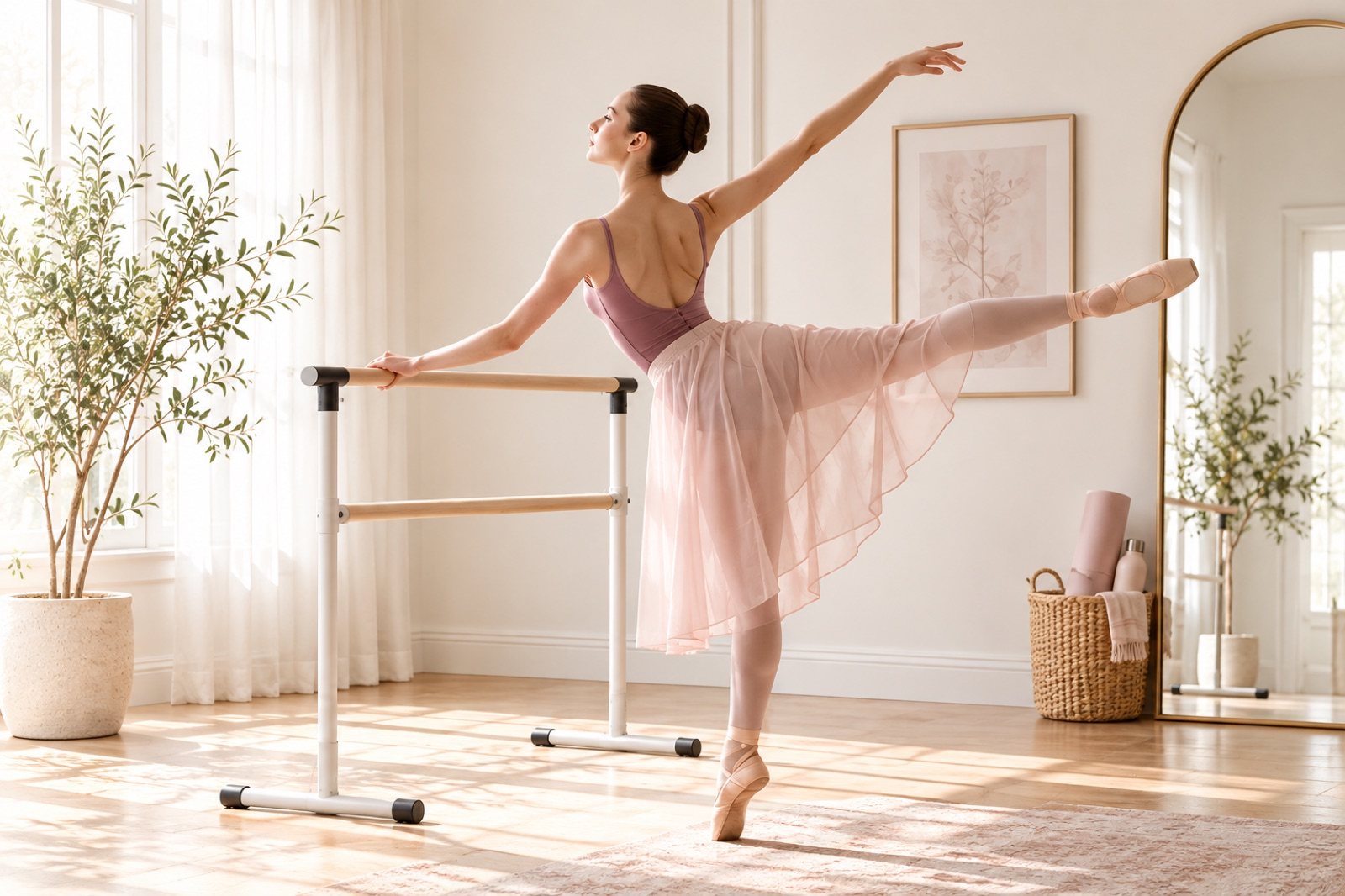
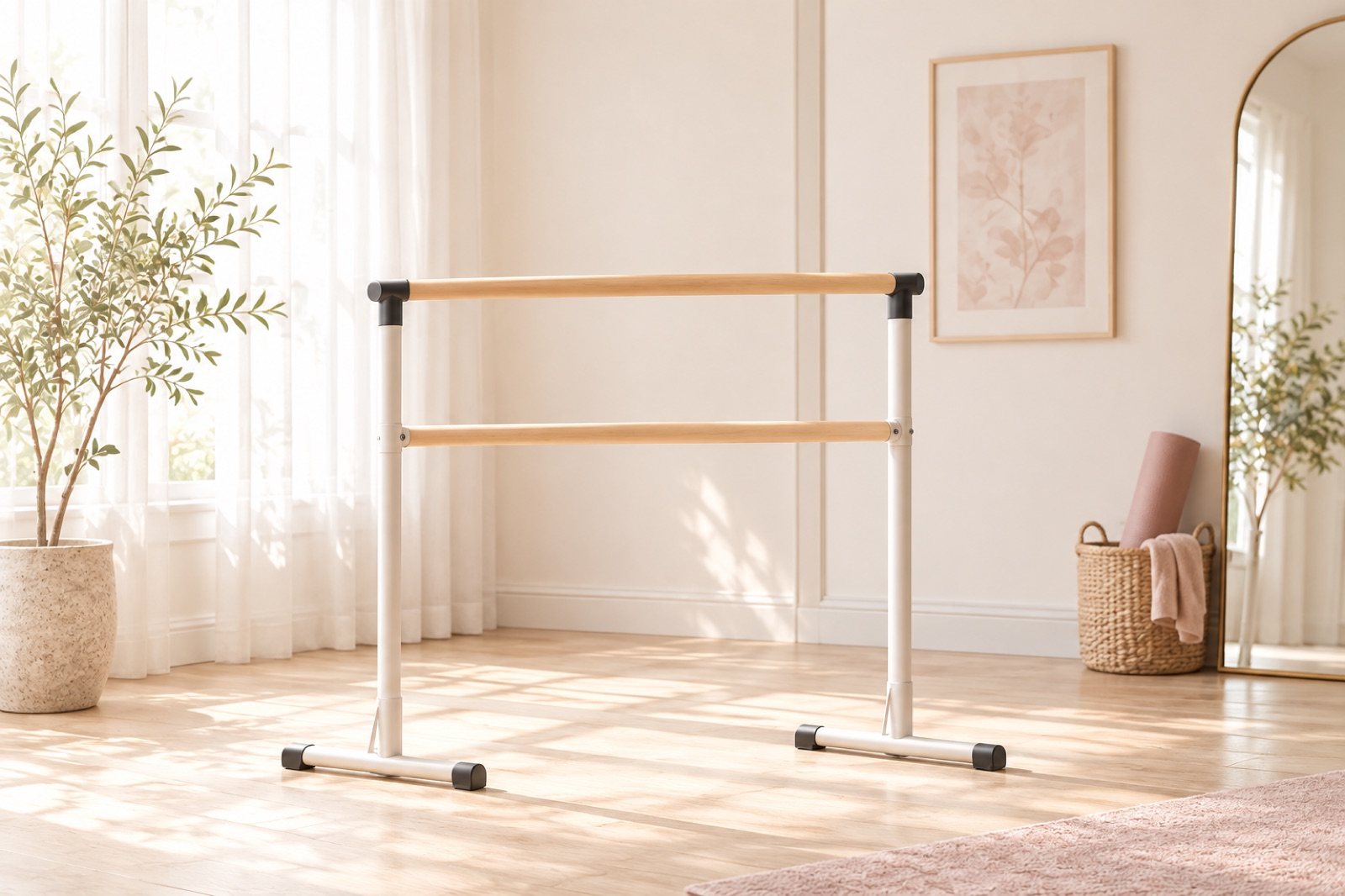
Start With Your Available Space
Measure the practice area, not just the equipment footprint. You need clearance to move your arms and legs, and space for doorways and nearby furniture. A compact model may suit a bedroom better than a larger installation.
Decide Between Portable and Fixed Designs
Freestanding barres can often be repositioned or stored. Wall-mounted barres provide a fixed location but need appropriate installation and a suitable wall. Portable models often appeal to renters and users of shared rooms.
Check the Height
For many traditional ballet movements, approximately elbow height with the arm relaxed can be a starting point, but individual needs differ. Adjustable rails are useful when several people share equipment.
Examine the Base and Materials
Review base width, non-slip feet, secure height locks, rail joints, and manufacturer-stated limits. Stable equipment should be used for its intended exercises, not heavy leaning or hanging.
Consider Storage
Some models disassemble into components; others fold or remain fully assembled. Check actual stored dimensions rather than relying on photographs.
Compare Before Buying
Once you have measured your space and settled on a height, it helps to look at a real listing with those numbers in hand. You can take a closer look at this portable ballet barre and check its dimensions, adjustment range and stated limits against your notes before you spend money.
Final Thoughts
The best ballet barre is one that fits your home, supports your intended exercises, and can be stored conveniently. Measure first and prioritize stability over appearance.