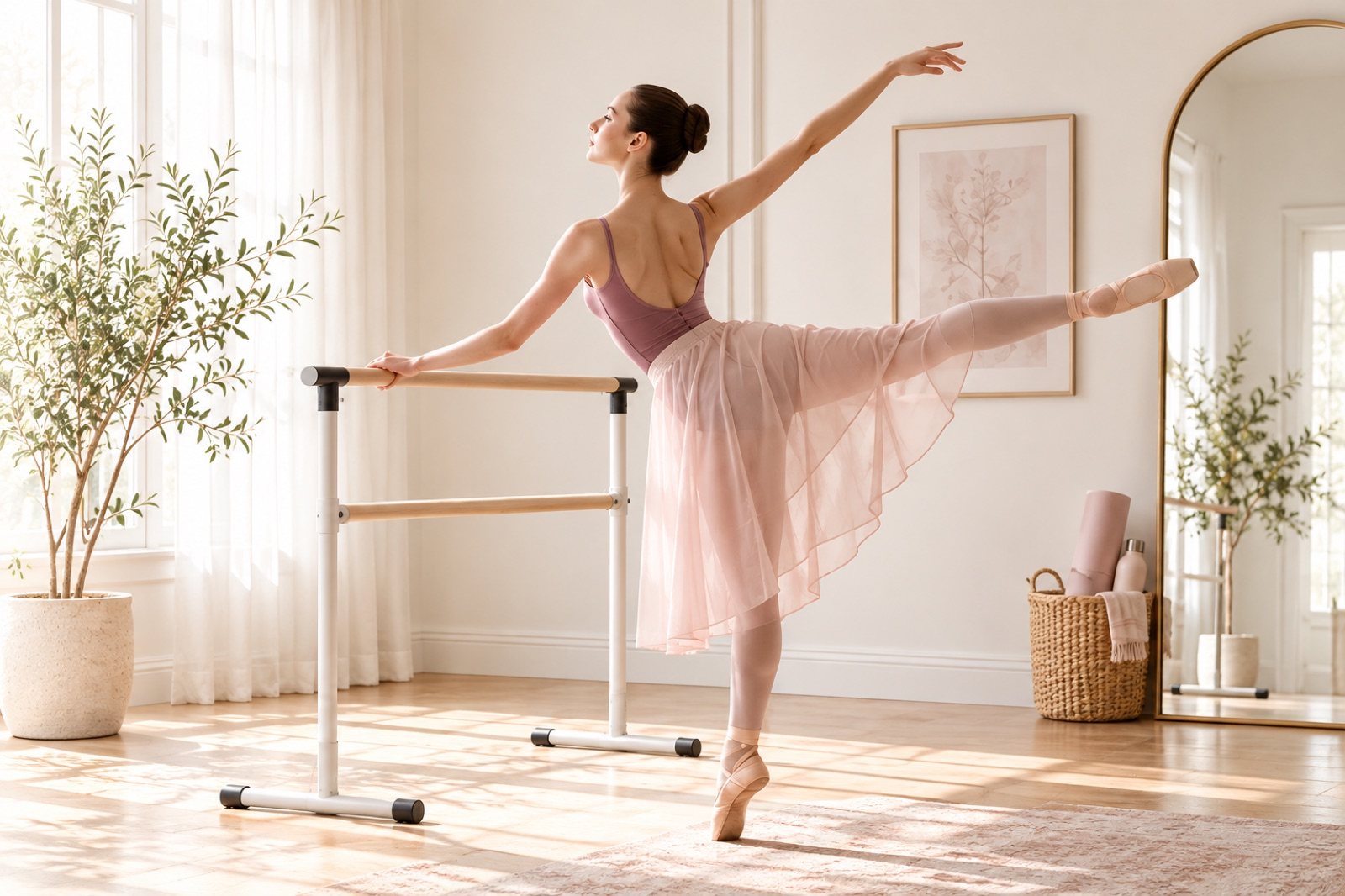
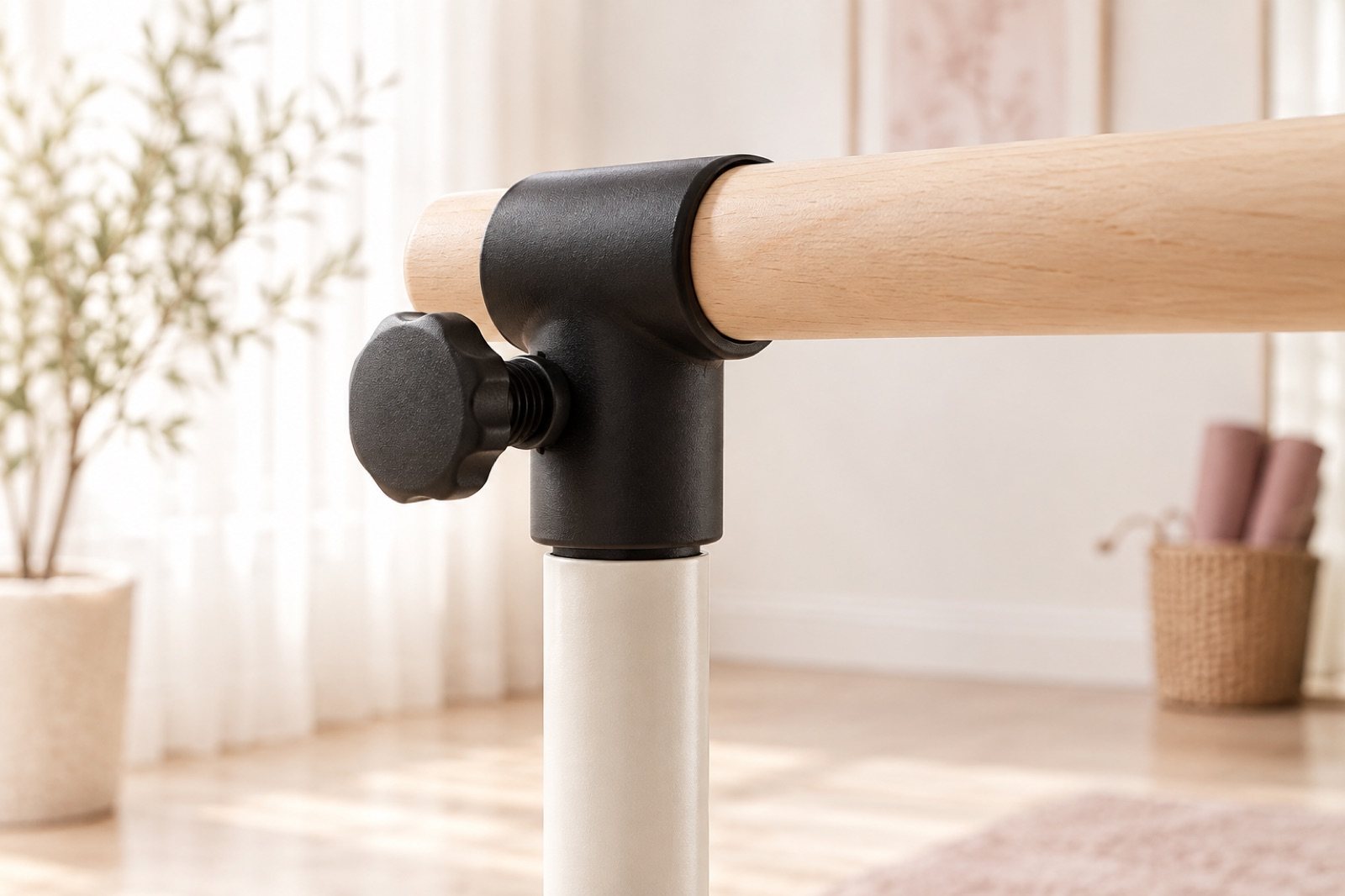
1. Adjustable Height
Confirm the adjustment range suits intended users and the locks can be secured reliably.
2. A Stable Base
Review base width, foot design, and the connections between rail and supports. Use equipment only for its stated purpose.
3. Appropriate Materials
Wood, metal, and mixed constructions can all work; inspect the joints, finish, and overall workmanship.
4. Convenient Storage
Check if the model folds, comes apart, or stays assembled. Compare real stored measurements.
5. Suitable Rail Length
A short rail may suit a smaller room, but ensure there is comfortable hand-placement space for intended exercises.
6. Straightforward Assembly
Look for clear instructions, included tools, and accessible adjustment points.
7. Floor Protection
Check foot materials and their compatibility with your flooring. A protective foot does not make every floor dance-safe.
8. Clear Manufacturer Information
Choose listings with detailed dimensions, intended uses, instructions, and limitations. To see how a listing should read, you can look at this portable ballet barre listing and run it against the eight points above.
Final Thoughts
The right barre fits your body, room, and practice. Reviewing construction and measurements before buying helps avoid unsuitable purchases.