Begin With Enough Movement Space
Choose a clutter-free area with room for the entire exercise range. Adapt movements to the clearance available.
Check the Floor
Avoid loose rugs, uneven or slippery surfaces. Some gym mats are suitable for stretching but not ballet turns or jumps.
Position Your Barre Correctly
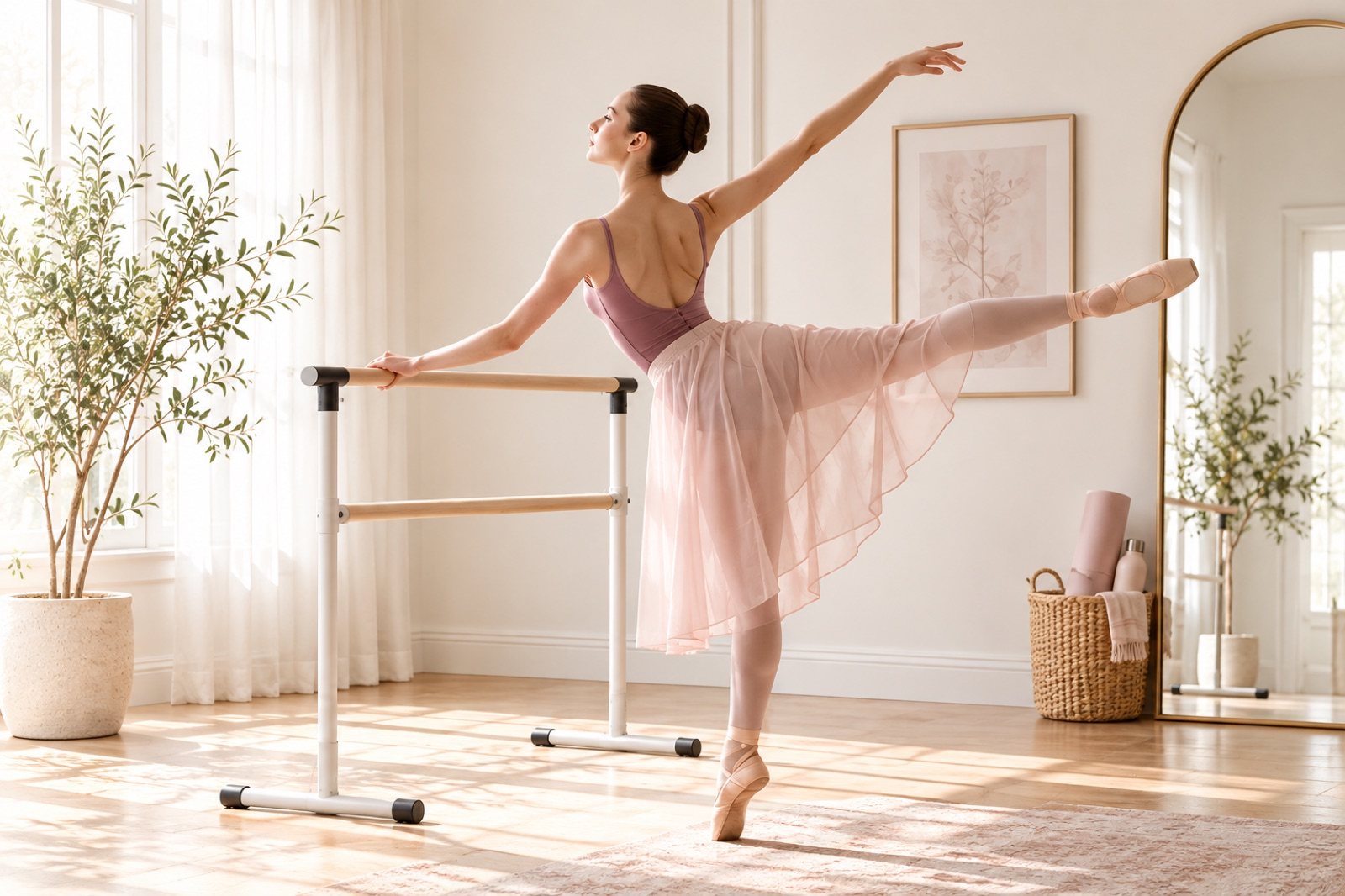
Assemble equipment according to the manufacturer, check adjustment locks, and place it on a compatible surface. Do not hang or pull heavily against it.
Keep the Area Well Lit
Ensure the floor and nearby objects are visible without glare.
Store Accessories Away From the Floor
Keep bags, bottles, cables, and loose equipment out of the movement area.
Select Appropriate Exercises
Beginners should seek qualified instruction. Turns, jumps, or advanced balance work may need professional studio conditions and supervision.
Further Reading
Stability, adjustability, and storage vary from one barre to the next. If you are choosing equipment for a safe setup, you can view this sturdy ballet barre for home practice and check its base width, height locks, and stated weight limits.
Final Thoughts
A safe space begins with suitable flooring, adequate clearance, correctly used equipment, and realistic expectations.